Food miles are one indicator of the energy that is expended to produce our food. The first Australian food miles study, presented by Sophie Gaballa in 2005 featured 29 supermarkets items in a basket of food
 designed to feed two adults healthy meals for a week. 25 items were produced in Australia and transported a total of 21,000 klm by road. When the imported baked beans, sausage, tea and chocolate were added the total shot up to 70,000 klm!
Made in Australia can also be misleading – The Powerhouse Museum in Sydney show an example of chips ‘Made in Australia’…true, but also discover the inks used contain components from India, China, the US and Europe and that the aluminium from Italy, added in Melbourne, was probably smelted from Australian bauxite. This is all before it gets to the supermarket!
In the UK, lambs are raised on poorer pastures, often needing extra fodder and winter shelter. It takes less energy to raise lamb in New Zealand with its rich clover pastures and hydro power and ship it by sea, making it the better option when you weigh up all the factors.
Consider too that frozen and perishable foods need to be transported in refrigerated trucks, using still more fuel. Over packaged goods need more space in transportation. Packaging, printing and wrapping also need to be shipped from their place of manufacture to the food processor, adding to the food miles of the finished product.
We also need to consider how food is grown, what amounts of water, fertilizer and chemicals are used and what effect crops are having on the environment in terms of clearing, land degradation, salinity and the impact on wildlife and native cultures.
Sweden, Canada and the UK now have labeling that states when a product has been air freighted – informed consumers can make their own choices. What can we do? There is no need to become a food miles detective or spend hours reading (and trying to understand) labels.
Eat produce in season.

Choose products with little or no packaging.
Avoid buying processed products with multiple ingredients.
Consider eating less meat and dairy products.
Shop wisely and frugally, buy only what you need, America could feed the world with what it throws away.
Explore your local produce.
Where possible, grow your own.
Read Barbara Kingsolver’s book: “Animal, Vegetable, Miracle.”
Become a locovore (look it up!).
Don’t forget, it is okay to eat Swiss chocolate, Italian cheese and Indonesian coffee - we also need to treat ourselves occasionally whilst supporting a global economy!
Happy shopping,
Nirala

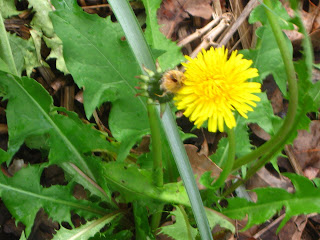 English dandelion (Taraxacum officinale) has been encouraged to grow where ever it likes in my garden as a salad green and chicken feed. It is a valuable addition to any diet, containing more nutrients than any other herb, including more Vitamin A than carrots. It is a tonic useful for the liver and gall bladder. Its sappy white juice can be used to remove warts. I had dug a large patch out to make room for more vegetable beds and was busy chucking it to the chickens when I realised it had roots on that the chickens wouldn’t eat.
