Showing posts with label Nerys Purchon. Show all posts

Sunday, January 16, 2011

And the sky cried

If I could make a wish for this year, it would be to travel through it with some measure of grace, calm and good humour.

Seeing out 2010

It has been a year and a day since my best friend Nerys died. There have been three hundred and sixty six turnings around the sun. Time enough in my life for a new grandchild, a family wedding, a new job, fifty one blog posts, the website launch and in the way of things, another death of a friend. I have missed her love, guidance and support, the stern lectures and the shared laughter. Thanks to both families and my friends I have found a path through the sadness and a measure of confidence to move forward
The pace of 2010 was frantic in all ways. In these first few weeks of the new year we have seen extreme weather conditions around the world causing death and destruction. The news arrives almost instantaneously through the electronic media, reminding us that we are not in control – that life has its own plan for us. In the face of every challenge, be it emotional, financial or physical, we tend to live our lives in the moment and begin to reassess priorities for the immediate future.
This weekend thousands of people have put aside their weekend to help others. Fifty five million dollars has been donated to a flood relief fund, and everywhere there are stories that show people at their generous best. Nerys would have liked that. 

Nerys and Marc with Brodie and Pip


Monday, May 17, 2010

Tasty kisses

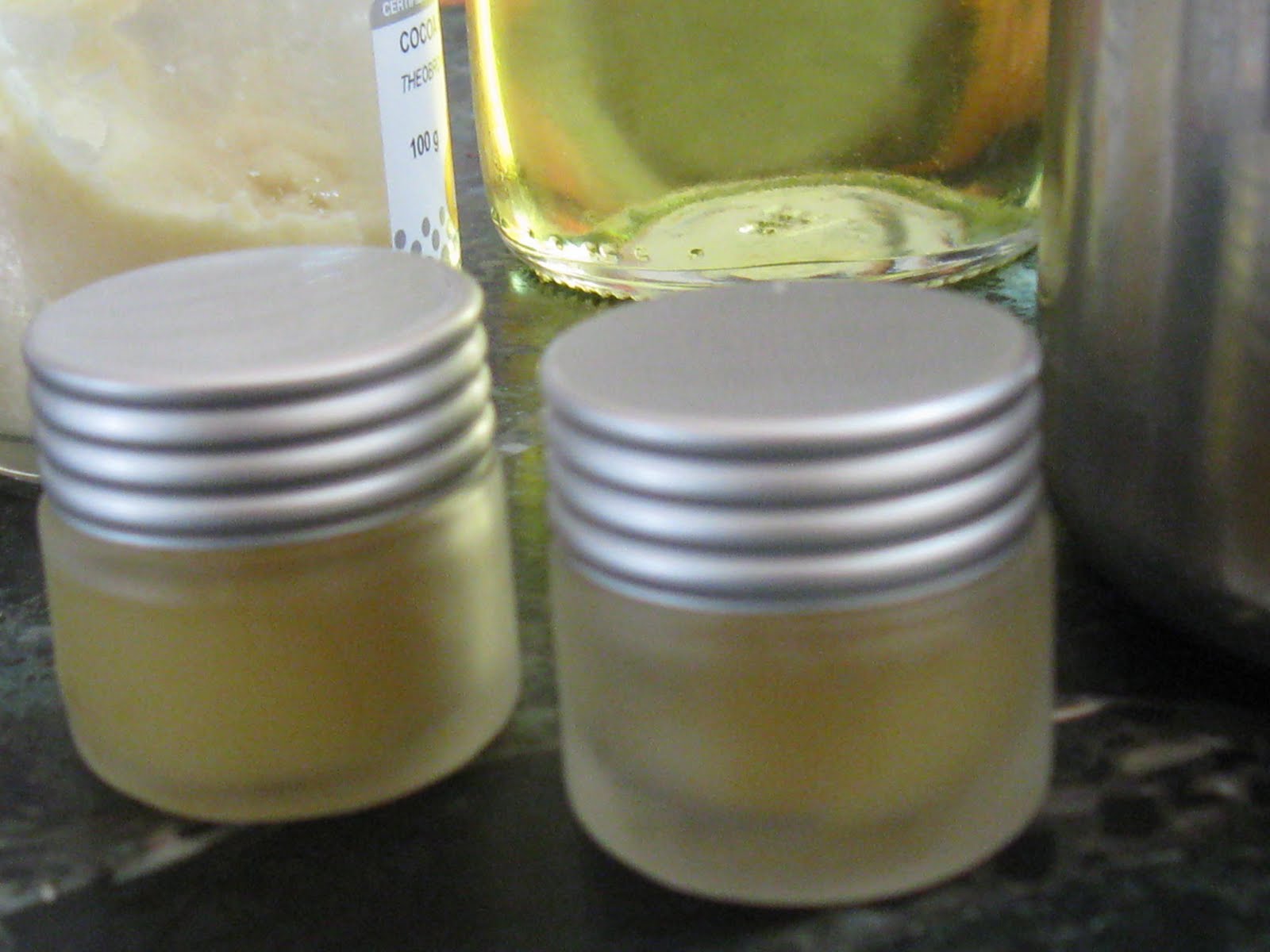
Extreme heat, cold or wind can make us all suffer from dry, cracked lips.If you have made ointment,you can make a very good lip balm that will protect and moisturise. The formula and method is almost the same.
Ingredients

15g beeswax beads
5gm cocoa, shea or mango butter
60ml oils of choice, see below* 
1/2 teaspoon glycerine


Gently heat together the first three ingredients until combined.
Do not overheat.
Cool slightly before whisking in the glycerine. This is made easier if you warm it slightly by placing the whole bottle in a mug of hot water before measuring.
Pour into small jars while still soft.
The lip balm may be flavoured by adding one or two drops ONLY of peppermint or spearmint essential oil before pouring.

Nerys once gave a an after dinner mint version of this for Christmas to which she had added chocolate buttons. It was good enough to eat and made me consider how many chemicals I had ingested from wearing lipstick over the years!

*The oils you use is for you to choose.  Almost any fixed (seed) oil can be used but do include either almond, olive or jojoba and some wheat germ for its vitamin E. Any oil suitable for eating can be used but these three are especially good for dry skin. Beware of using nut oils for people who may have allergies. I have one client who is gluten intolerant and insists on cream that doesn't wheatgerm oil.

In summer you may like to increase the amount of beeswax slightly if the balm becomes too soft in the hotter weather. You can also add a half teaspoon of warmed honey or aloe juice combined with the glycerine if you need to heal badly cracked lips. Don't be tempted to try to add too much as it will separate out of the mixture, sitting on the bottom as healthy sludge!

Monday, May 3, 2010

Nanna's magic cream

For many years now I have made a range of herbal products including a beautiful green healing ointment. Over the years the formula has changed and the current version contains 11 essential oils, 6 tinctures and extracts of 17 different herbs, chosen for their varying properties, nearly all grown in my garden.
Ointment is a simple way to preserve and concentrate the healing power of herbs. The ingredients are easily sourced from your local chemist and health food shop. The equipment needed is minimal and can be found in most kitchens.
Choose your herbs for the properties you wish to bring to your ointment. I like to always start with comfrey, lavender and rosemary. You will need to make a herb oil and if you like, a tincture, starting at least 10 days before you wish to make the ointment. If you make your oil extraction in advance,  keep it in the refrigerator until needed. Tinctures keep well at room temperature but store out of reach of children.

Equipment:


Stainless steel jug or saucepan
Measuring jug
Plastic or wooden spatula
Scales
Clean jars with tight screw top lids to hold a total of 300gm.
Ingredients


120ml herb oil
20g beeswax, beads or block
120g lanolin
1 Tbsp or 30ml tincture of choice or tincture of benzoin (optional) 
2tsp or 15ml essential oils of choice
Method:


  1. Very gently melt the beeswax and lanolin together over a gentle heat. If you have a stainless steel jug, this works really well as you can melt and pour in the same container. Use a heat diffuser under the pot if you have one.

  2. As soon as the mixture is clear, turn off the heat. Remove pot to a heat proof surface and leave for a minute to cool slightly but not harden. The lower the temperatures, the more properties of the herbs are retained.

  3. Slowly stir in the herb oil, which should be at room temperature. If the mixture starts to look lumpy, sit the pot back on the warm stove but do not reheat.

  4. Add essential oils and tinctures and mix until incorporated.

  5. Pour into jars and lid. The ointment is at its best for nine months but I have used older pots on the animals with great results. Unopened will keep for much longer.
 

Any type of ointment can be made by the above method. Please note that wax based ointment is not suitable to use on burns, eczema or psoriasis or any conditions which require the skin to breathe. If any  adverse reaction or sensitivity is noted, discontinue use.
I use my multipurpose ointment on bites, grazes, blisters, cuts, nettle, nappy and reef rash, piles, stinging tree injuries, cracked feet and nipples and to draw boils and splinters. I have used it on chickens’ combs to cure stick fast fleas, on bald guinea pigs and injured dogs and cats with great success knowing it is a safe product  My son swears it cures mouth ulcers and my granddaughter is comforted by a dose of ‘nanna’s magic cream.’
The original formula was originally created by Nerys at Rivendell Farm. To take the lid off a pot and inhale the scent of the essential oil blend is a reminder of soothing words and gentle hands for our families and friends and many clients over the years. It is a wonderful reminder of the skills taught to me by an amazing person.
Green Healer (nanna’s magic cream) will soon be available via my website.
Go well,
nirala

Monday, March 15, 2010

Stop the press...twice!


Just a quick note to congratulate the Purchon clan and welcome two new babies. A girl and a boy were born safely this weekend within a day of each other. Well done everyone especially the two first time mums and the first time grandma.


Lots of love to all, nirala

Monday, March 1, 2010

Lessons on the river and in the garden

It's hot, its been hot for quite a few days in a row now. The gum trees, and some of the deciduous trees around us have responded by dropping copious amounts of leaves that soon build to a fire hazard if I don't rake them every couple of days. The garden is suffering, what hasn't been scorched has been attacked by mildew and fungus.

I went with some trepidation to look at the fig and the olive tree who grow near the back fence and receive little or no water all summer. They were thriving - it was near perfect conditions for them! Big juicy figs that you can barely get your hand around and branches beginning to bend with the first pickable crop of Kalamatas.

They were planted six, maybe seven years ago but were always overshadowed by the neighbours Marri trees. Sadly, last winter they cut down all the trees on their block, changing the conditions and the views for us. Azaleas and hydrangeas, clivias and violets all shrivelled in the bright and exposed conditions but the two slow and sickly trees began to pick up.

I had been planning to write about drying figs today but as the story of the trees emerged my mind began to think about the effects of change. Two days ago I stood on a barge and watched Nerys' ashes float downstream accompanied by a flotilla of roses. I stood with Nerys' eldest daughter, she had lost her Ma and I had lost my best friend and mentor. Everyone there was missing a huge part of what made them who they were.
It's always hard to grow up. How much harder is it when we lose our wise elders and have no magic touchstone when we need direction? We become the older generation so shockingly suddenly that we feel totally unprepared for the job. What we need to treasure is those facets of them that we have admired and take them for our own. We can call on the wisdom we know they would have applied to life and help each other remember.

Still, thanks to the neighbour who let the light in, the figs are ripe. Thanks to Nerys and my mother, and all the wise women in my life, I know how to pick and preserve them and how to cook with them too. I know about sticky fig sap and itchy fig leaves and what happens when you eat too many. This I can pass on to my grand daughter and hopefully I can learn to become her wise elder as we grow up together.


nirala

Thursday, January 21, 2010

Farewell and welcome

Yesterday we celebrated Nerys' life with friends and flowers, laughter and tears, with music and poetry, candles and song, the fragrance of herbs and her favourite essential oils. Her strength and beauty shone, mirrored in the faces of her family, her joy for life in the dancing of her grand daughters and her love for all in the rich variety of her many friends gathered together.
Nerys would be thrilled to know my new grandson, Luke, arrived yesterday and that twin lambs were born at Summertime Farm this morning. So moves the circle of life.
with love,
nirala

Saturday, January 16, 2010

'Life isn't measured by the breaths you take, but by the moments that take your breath away.' Marcus Aurelius


It is with a heavy heart that I write today as Nerys passed away suddenly on Friday morning at Summertime Farm. Her great enthusiam for life, her insatiable curiosity, the wonder and delight she found in the magic of nature, her passion and limitless courage to push boundaries have inspired everyone who knew her. An extraordinary human being, she leaves family and friends worldwide missing her wise and generous heart.
Travel well gypsy woman.
with love,
nirala

Sunday, June 28, 2009

Lion in a Teacup

Since reading Barbara Kingsolver’s book ‘Animal Vegetable, Miracle’ last year, I have become increasingly aware of the ‘food miles’ that are logged up on some of the items I regularly stock in my pantry. The book is the story of her family’s first year of committing to eating only what they can grow themselves or source locally. They allowed themselves one luxury item each, to be sourced through Fair Trade organizations. Barbara chose spices, her husband coffee. I can relate to both those choices. I hoard my Dutch cinnamon like a miser and often take its lid off so I can inhale the warm spiciness. My naturopath, a confessed coffee addict herself, advised me recently that I should give up coffee as part of a detox diet. The first few days were not pretty but I rediscovered a blend of dandelion and chicory root at the local health food store that mimicked the flavour enough for me to pretend it was the real thing. It is a good product but expensive and imported from Europe.

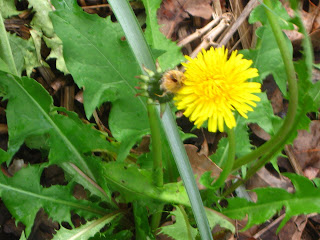
English dandelion (Taraxacum officinale) has been encouraged to grow where ever it likes in my garden as a salad green and chicken feed. It is a valuable addition to any diet, containing more nutrients than any other herb, including more Vitamin A than carrots. It is a tonic useful for the liver and gall bladder. Its sappy white juice can be used to remove warts. I had dug a large patch out to make room for more vegetable beds and was busy chucking it to the chickens when I realised it had roots on that the chickens wouldn’t eat.

Trimming and washing the roots, I chopped them into even sized slices and laid them on the racks in my electric food dryer. When dry, they went onto a baking tray which I placed in the oven of my cooling slow combustion stove as I shut it down for the night. By morning the pieces were uniformly dark brown in colour and looked like the stuff in the jar.

The taste test was next. You need to simmer the root for 5 minutes before straining. It can be used a couple of times before loosing its flavour. While similar to the commercial product, mine was a little earthier and lacked the ‘roundness’ of flavour that the chicory root provides. Mixed half/half it was good. If I can beg some chicory root, I will try that next time.


If I chose to, I could drink lemongrass or mint tea all year round as they both grow well. Instead, I chose an interesting experiment to provide one jar of produce, with very little cost to the environment or myself. I will never be able to grow coffee, tea or enough dandelion root to supply my own needs but I feel I am a little more informed about the effect of my shopping choices in terms of the environment.


For more information on eating dandelion, see Cooking with Herbs e book by Nerys Purchon.

Wednesday, June 17, 2009

Cooking with Herbs e-book

We have again been cooking, feeding people and madly photographing to bring our latest book to the light --- we are pleased to tell you a bit about it and share one of the recipes with you (in the sidebar).
Making your food a herbal event doesn't take any more preparation time than to create an ordinary meal and changes 'dull' to 'delicious'. Herb leaves, seeds and flowers can be used in salads, seasonings, cakes, desserts and main meals, and by adding herbs to these foods we can help to ensure that our meals are attractive, tasty and digestible. Herbs add distinction and more: oregano and thyme are also digestives, peppermint and spearmint help to dispel wind, the seeds and feathery fronds of fennel help to digest fat. By adding herbs to your cooking you are using them in a preventive way. For instance, caraway added to cabbage, or coriander to beans during cooking helps to prevent flatulence, as well as giving the dish a delicious flavour. This seems to make more sense than drinking a cup of caraway tea after the meal to cure the discomfort. They can also add vitamins and minerals to the diet. In addition to recipes for meals there are sections for food for pets and a section on making herbal wines and liqueurs and this section even includes an aphrodisiac liqueur!
Tips on the medicinal properties of herbs are scattered throughout the book. here is a typical entry: TIP Rosemary can soothe a sore and upset digestive system where there is flatulence and liver inadequacy. It stimulates the production of bile and improves poor liver function. Rosemary contains about 14 mg of easily absorbed calcium (known to calm the nerves) in each teaspoon of chopped leaf so it acts a tonic and restorative to the nervous system. The book may be purchased from our website or from my Etsy shop

Monday, May 11, 2009

Peace...is it so difficult?


Walking on the river bank this evening, listening to the ocean beating on the reef and watching the sun's last molten rays blazing into the clouds I wondered...Peace...is it so difficult?
Nerys

Tuesday, March 17, 2009

Rivendell Farm


When we arrived in Australia in 1968 we had $100.00 in our pocket, three children and a lot of hope. Marc had a job to go to, the weather was glorious and this was the land of opportunity. Australia has never disappointed us. My two other children and a new son-in-law came from Britain and once more we were a complete family.

Marc and I were enjoying a rare quiet breakfast with toast and newspapers when he said 'Hey; listen to this ad. ‘For Sale. 16 acres of land and a weatherboard house. $12,000.00'.


Ferguson Valley 18 miles from Bunbury is the local area of scenic beauty where people would take the children for a Sunday afternoon drive to picnic in the forest and we loved and lusted after this area on sight. We organised an estate agent and were standing on the land an hour after reading the ad.

We knew immediately that this place was ours. The house, uninhabited for 18 months had been condemned as it had no running water, no bathroom or toilet, the roof cavity was infested with rats and possums and the ceilings were falling in. The orchard was filled with fruit trees past their prime, untended, sadly in need of pruning and water.

Looking beyond these (to us) superficial disadvantages we saw a sturdy house built of mature, solid, seasoned jarrah standing on an east facing slope where the morning sun warmed the old timber; rich chocolate loam where my herbs would flourish and most importantly we saw a home. We were so wild with enthusiasm and excitement that the calm and steady estate agent actually tried to bring us down to earth by pointing out the disadvantages. His words of caution fell on deaf ears and I went hightailing to the bank to ask for money. That was how we came to Rivendell.

We worked from first light until dark and often later, renovating the house and creating terraced gardens on the sloping land. Gone were the leisurely days of a glass of wine with dinner and a liqueur afterwards; dinner frequently happened as late as 10.00 pm and was eaten in a semi-conscious state. Dead trees were ripped out and new fruit and nut trees planted. A small new flock of sheep, three calves, 24 chickens and a flock of geese were to be our meat larder and barter system. Herb gardens grew at an astonishi
ng rate in the good soil, pure air and clean water and after some time we were selling potted herbs, dried herbs, herbal tinctures and ointments.


We opened a restaurant called ‘The Prancing Pony’ and herbs were a major feature of the meals. Customers were encouraged to eat the garnishes and were enchanted by flower salads glowing like dishes of jewels, sauces redolent with basil, thyme and oregano, delicate dishes that hinted at French tarragon, mouth-watering desserts sweet with angelica and lemon balm, ice-cream with the delicate flavour of lavender. Glass jugs of iced water with slices of lemon and sprigs of peppermint stood invitingly on each table, and little bowls of fennel seeds were there to solace and comfort those who had eaten well but not wisely!

Making your food a herbal event doesn't take any more preparation time than to create an ordinary meal and will change 'dull' to 'delicious'. Herbs add distinction and more: oregano and thyme are digestives, peppermint and spearmint help to dispel wind, the seeds and feathery fronds of fennel help to digest fat. By adding herbs to your cooking you are using them in a preventive way. For instance, caraway added to cabbage, or coriander to be
ans during cooking helps to prevent flatulence, as well as giving the dish a delicious flavour. This seems to make more sense than drinking a cup of caraway tea after the meal to cure the discomfort.

Herbs can also be used to replace salt as a flavouring agent. This is good for everyone but particularly those on salt-restricted diets.

We will soon be adding a new book ‘Cooking with Herbs’ to the growing collection of e-books. If you’d like to be on our mailing list to receive details of our latest books just drop a line to
gypsiestravel@bigpond.com and we’ll add your name to the list.
Nerys