Monday, July 26, 2010

Playing Indian


In India I became besotted with Masala Dosa, a crispy rice pancake, often filled with spicy potato and served with a small bowl of soup and coconut chutney and served as a snack or for breakfast. Ever since, it has been a misson of mine to be able to replicate the recipe.

Wild Fermentation  by Sandor Katz contains a recipe for the dosa batter, which is also used to make Idliis, a steamed dumpling. So a new jar appeared on the work bench, it was pink in colour and over the next few days began to bubble. The coconut chutney recipe, which can also be fermented, or not, was on the following page. Was I excited! I had been making the masala potato recipe for years as a side dish to curries, so we began to experiment cooking dosa with our crepe pan which is flat like a tava. The results were tasty, but not as crispy, or a large as the real thing. The chutney was fabulous but I had no leads on making the soup.
In an Indian supermarket in the city, not only did I find a non stick tava, but a spice blend for making the soup, or rasam. Another dosa making session, this time larger ones but still not crispy. I tried oil on the pan, oil brushed around the edges and thinning the batter which made lovely lacey dosas. The only crispy ones were the ones left next to the wood stove overnight. They were much appreciated by the chickens! 
The quest continues.
Here’s the recipe for the chutney which I have adapted slightly from the original...
Coconut Chutney

1 C dessicated coconut, soaked in ½ C warm water to soften.
3 Tbsp chickpea flour, toasted in a frypan till it begins to smell nutty and turn golden.

2 Tbsp tamarind puree
1tsp salt
1tsp ground cumin
1tsp ground coriander
1Tbsp honey or sugar
1Tbsp oil
½ tsp mustard seeds                     
1 C kefir or yoghurt

In a blender process coconut, chickpea flour, spices, tamarind and honey.
Fry the mustard seeds in the oil until they begin to pop and stir in half the yoghurt and stir to combine.
Add to the blender with the rest of the yoghurt and process until combined.
Add extra yoghurt or water if the mixture seems too dry.
You can eat it now, or cover with a piece of cheese cloth and let it ferment for a couple of days before storing in the refrigerator.

Serve with dosas, samosas, curries, on toast....on everything...I love this chutney!

 
Masala Potatoes
2 Tbsp oil
1tsp black mustard seed
10 curry leaves, preferably fresh
½ tsp turmeric
1 tsp grated ginger
2 green chillies, finely chopped
2 crown onions, diced
500g peeled potatoes, cut in even 2cm cubes
1 Tbsp tamarind puree

Heat the oil and add the mustard seeds, cooking until they pop.
Add the rest of the spices, chillies and onions and cook until the onion is soft.
Add the potato cubes and a cup of water to the pan, bring to the boil, cover and simmer until the potatoes are cooked and the liquid has vanished.
Add more water if you need to in order to cook the potatoes until soft.
Stir in tamarind and season with salt.
A quicker method is to pre boil your potatoes but frying gives a more authentic flavour.
Add yoghurt to any cooled leftovers to create a tasty potato salad.
If anyone has a tip for crispy dosas, please let me know...
Enjoy your cooking.

Monday, July 19, 2010

Grandma's undies

My grandparents never owned a washing machine and had probably never imagined a clothes dryer. As a child I remember tea towels and nappies would be boiled (separately) in the copper and my grandfather would do the rest of the weekly wash in the bath tub.
We lived in a very damp part of the Home Counties. In summer the washing was hung on ropes with hand carved wooden pegs we bought from the gypsies who visited each year and propped with long  forked sticks. In the winter, the washing was hung on a clothes pulley above the kitchen which boasted an electric oven and an open fireplace and was the warmest room in the house. The pulley loaded with wet washing was hauled up into the air, resting near the ceiling where it dried in record time.
When I first moved here, I was delighted with the fact that my Raeburn wood stove in the kitchen and high ceilings meant I could have a pulley of my own. It was cheaply constructed from timber off cuts of 630cm of 40mm x 20mm timber salvaged from old garden chairs and 7 x 180mm lengths of 10mm dowel. A chain was attached with screws at each end and used to hang the builders twine that was then threaded through two small pulleys attached to the ceiling. The cord is knotted to prevent it from coming away and is hitched onto a firmly secured hook set into solid timber.
Please take care that the cord and all other cords are kept out of reach of children. I recently found our ancient poodle with it round his neck, walking around in very confused circle. If he had managed to pull the cord off the hook, the weight of the washing would have strangled him. 
I can put a full load from my washing machine up in the rafters in the evening and most of it is totally dry by morning. My visitors, the ones that notice it, are hugely entertained by it but most people don’t notice it. I do try to remove the underwear from it each morning and to not load it up when I am cooking anything with a strong smell. The dogs may love me smelling of lamb roast but it’s not a great perfume for supposedly clean clothes!
This simple solution to clothes drying uses the heat from the stove, which also heats our hot water (and the house) and there is no tripping over clothes horses or rushing in and out as the rain comes and goes. Spread with a towel, it dries my felting. In summer it can dry herbs and chillies in bunches or lay on fly wire. When not full of washing, it airs the bathroom towels. My ten year old grandson insists he’d like to sleep on it!
Can your clothes dryer do all that and not cost you an extra cent on your power bill?


Thursday, July 15, 2010

Phone Wars

It is Thursday afternoon. In the last ten days, I have made what seems like a thousand phone calls, had messages left by Indian voices I cannot understand; spent hours on hold, listening to muzak and have had no internet or phone line. I have even thrown myself in front of the local Telstra technician’s truck to plead for help.
Three weeks ago it was requested that the second phone line to the granny flat be connected. It finally happened on Monday morning when Telstra in their wisdom, decided to disconnect the house line and connect the new line and number to mine. That meant I had lost my phone and Internet. I would have to wait until my number was reconnected and then request the Broadband be reinstated. My phone company told me it would take 1-2 days to reinstate this line and I would be liable for a reconnection fee.
Telstra meanwhile assured us that all was sorted and the phone to the back would be turned on overnight, freeing my line. Telstra said the tenant would not have to pay a connection fee, to compensate her for the problem. As for me, I wasn’t a customer so they couldn't help me.  I lodged a formal complaint which they said would be dealt with within two business days. I had another call from someone trying to contact the tenant and explained this was not her line. Did I mention I had an active line that is not my number or account and needs to be disconnected so that my provider can reconnect me? I can’t get it disconnected as it’s not my account!
The second phone line was finally connected on Friday morning. The house line was disconnected at 4pm, far too late to do anything about a reconnection. It took my phone provider and Internet provider a day and a half to reconnect me...amazingly fast compared to Telstra.
Living in the country and running two online businesses, we are vulnerable to any communications meltdowns. Telstra still owns the lines, it seems they can disconnect you at will and take no responsibility for their actions. There is still no word about my formal complaint which is `waiting for a case manager to be assigned.’  I have spent hours each day trying to sort the problem, become stressed, angry and frustrated talking to a different voice each time that promised to help and appeared to do nothing. Everyone I speak to have a similar story to tell. Is this what free trade does to business or is it merely incompetence? I had better stop boring you with my woes and get to work. Now I am up again there are a hundred emails to deal with!

Monday, June 28, 2010

Tukmaria: diet seed?

We have a three and a half hour drive to the nearest international airport, so when one of us is about to travel, it is a great excuse to spend a couple of days in the big smoke. Apart from visiting family and friends, shopping and eating are my favourite city pursuits. Staying in the inner city meant new food shops to explore and as always, I came home with some weird and wonderful things.

I was thrilled to find ready to drink Basil Seed Drink (with honey.) Since I discovered tukmaria seed http://frompotionstopesto.blogspot.com/2010/01/tukmaria-sacred-seed.html  I have been on the lookout for more recipes. I opened it yesterday. It was very sweet, thanks to the 12 % sugar and the honey flavour (!) and I needed to add some lime juice to it to make it palatable. The interesting side effect was that come lunchtime, I wasn't hungry. Checking the label further I found it contained a small amount of dietary fibre, calcium and iron and was 20% carbohydrate. So what are the healing properties of tukmaria?

The mucilaginous gel that forms around the soaked seeds acts as a demulcent, soothing the mucous membranes, and is used to relieve constipation and diarrhoea. Like chia seed, which also forms a gel when soaked, it is possible that it slows down the speed our bodies' convert carbohydrates into sugars. This would account for the feeling of fullness lasting longer and could be useful for weight loss and diabetes.

In Asia, where  basil seed is also known as sabza, subza, takmaria, tukmaria, tukhamaria, falooda, selasih (Malay/Indonesian) or hột é (Vietnamese), Ayurvedic and Siddha medicine both recognise the health benefits of tukmaria. Other reputed benefits are a more active digestion, removal of toxins from the gut and the ability to help prevent heart conditions by lowering cholesterol  although I have not found any scientific research to back this up.

I feel that tukmaria has great potential to replace slippery elm, an endangered rainforest tree that must be killed to harvest its inner bark, as an easily grown, safe remedy for stomach complaints.

Just before lunch today, I stirred half a teaspoon of seed into a glass of cold water with the juice of a lime. An hour later, I still felt quite full, even though the amount of seed I drank was much less than was in the drink yesterday. It was a very pleasant and refreshing drink that didn't need sweetening. It can be added to hot drinks, herb or black teas, or to warm milk. If you don't like the slippery texture add it to soaked Bircher muesli or stewed fruit. It has very little taste of its own.

 I am on a mission to lose weight at the moment so maybe fate is at work again. I'm going to stick with drinking tukmaria for a couple of weeks and see what happens.

Monday, June 21, 2010

What nonna never told you

I am a firm believer in fate. I hadn’t read, let alone reviewed the book for Monday’s deadline for the local paper. Seeing a new cover sparkling at me from the cookbook section with proscuttio and other yummy things on the cover, I grabbed one to take home, thinking it would be easier than reading another 200 pages of a novel.
What a wonderful surprise! How come I hadn’t seen this book before? It had first been published in 2006 and 16,000 copies later it is in its fifth incarnation. Being self published, in another state, we had never heard of it until a customer asked us to find her one. Postage being expensive, we ordered a few extra.
I wish I had discovered this book earlier in the year when we had an abundance of summer vegetables and olives.  Stepping into the pages of Pietro Demaio’s book is like being invited by a neighbour for a hearty lunch accompanied by good red wine and conversation.  In the 60’s Pietro began collecting traditional recipes from his family and friends, and still does, each edition larger than the first as he incorporates recipes and food stories sent to him by readers.
 Drying, salting, bottling, pickling, preserving in oil are some of the method preserving that also includes  sections on cheese and salami making, preserving fish, and making wines and liqueurs. There are eighteen different ways to preserve olives, how to make bread and build the oven to bake it in. The clearly laid out recipes are interspersed with hilarious stories and traditions, including a section on avoiding the evil eye!
 My enthusiasm for the book must have been obvious, we sold all copies and had orders for two more within 24 hours of the review being published – the most successful review ever! 
It felt like you should have been given a jar of something to take home with you when you reach the end of the book...that didn’t happen and unfortunately  I have to wait for the next lot to arrive before I can have a copy to take home so I can dive into a preserving frenzy.
You won’t have to.

Happy preserving, I have another review to write!

Wednesday, June 16, 2010

Mooving on....

Since March, the shire has been invaded by cows – hefty, life size cows crafted from fibreglass and decorated by various artists.

I was a Cow Parade sceptic. Why take on a project that was originally created so that cows could appear on the streets of major cities? After all, we have plenty of the real things here and the idea of attracting even more tourists during the busy times of Easter and vintage seemed a bit silly.  The ‘local ‘artists included famous names from hundreds of kilometres away while artists who lived here were overlooked. The cows, modelled on a Swiss variety, were made in China , so not much local input there either. It all seemed a bit silly, not to mention expensive. There was subversive talk of quarantining them for foot and mouth and of arranging a similar event with an Australian native animal and much admiration was shown for the man in Brazil who brought in some fibreglass  bulls to service their cows one night. 
The cows will disappear at the end of this month, to be auctioned for charity. I will miss sniggering about the reports of cows getting people arrested for vandalism or climbing the water tower, of cows being ridden, stolen or going for a swim out to the pontoon; the delight and amazement on the faces of the children who find the cow outside the chemist shop:  the tourists asking ‘What is it with this cow thing?’; the comments by the retired farmer, worried that the cow might not get back up on her feet; the old ladies chatting to the cows while the Japanese tourists queue for a photo opportunity; by my being surprised to see yet another one lurking in an unlikely spot.
They are to be auctioned for charity at the end of the month; I hope some of the charity stays here. I’ll miss all the people watching!
The locations of these pictures include the local hardware, a street verge, the roof of the tavern, the water tank and my favourite, Rump on a Stump ( a spoof on a golden diver at one of the posh wineries), in a local park.
Life can be silly sometimes, can't it?

Monday, June 14, 2010

Cold weather dipping


The promised birthday fondue happened this week, with a minimum of traditional style fondue eating guests in attendance. The quandary I had was what to serve as appetisers and desserts. My old fondue book, published in 1970 (in Australia) recommends cherries ‘a la kirsch,’ and various other fruits in combination with other types of alcohol. No mention of appetisers but it is recommended that you drink a glass of kirsch halfway through the meal. Only in the 70’s could you get away with thinking that bread cheese and alcohol was a balanced meal! Knowing Amita would heartily endorse this philosophy, I quickly hid the cookbook.

Poking around in the pantry, I pondered that as fondue was a cold weather meal, it would make sense to pair it with seasonal produce. Pecans, olives and Granny Smith apples are abundant at the moment. Warming food seemed to be the order of the day so I started with olives baked in red wine - a recipe I posted here this time last year. With the pecans I tried a recipe I had been told about by my friend Tova. It was one of those that had been enjoyed by her family for years. It didn’t really have quantities or times but sounded easy.
Here is what I did:


Roasted pecans in their shells

Pecans in shells
Sea salt

In a mortar and pestle or with a rolling pin, gently crack a split in the shell of each nut while preheating the oven to 180C.
Dissolve about 2 tsp of sea salt in a litre of warm water. You need enough brine to cover the nuts.
Soak the nuts, in their shells, in the brine for 5-10 minutes.
Drain.
Place the nuts on a baking tray.
Bake until the nuts have begun to toast, they will give off a nice toasty smell. Shake them once or twice during cooking.
Serve warm and let people shell their own.

These are really delicious as the nuts are soft, sweet and warm. Next time I would add a little more salt but you could have some on the side for serving.
For dessert, I stuffed some of the apples with some more pecans, processed with butter, home dried figs and brown sugar with cinnamon, baked and served with double cream for those too weak to refuse it!
It was a lovely meal and quick to prepare, the longest job was washing the greens for my salad which I had to make to reassure myself that everyone had eaten wisely as well as generously. I am happy to report there were no fondue fork injuries suffered!

Eat well,

nirala

Monday, June 7, 2010

Something fishy going on

It is a family tradition that if you are at home for your birthday, you get to choose what we have for dinner. Amita is predictable as his favourite meal in the whole world is fondue. He likes to eat it in the traditional Swiss way, simply bread and cheese. After cracking two ceramic fondue pots, one birthday I bought him -  a smaller Le Creuset (son of the blue pot)   that fits perfectly on the burner.

I threaten to fall into a swoon if I can’t eat something green at every meal and contaminating the fondue with any vegetable, except possibly potatoes, is frowned upon. The other serious problem is inviting guests for a fondue as he loathes sharing it. So that is one: an unhappy cook (not recommended) and two: guests duelling with fondue forks over a hot pot (also not recommended.)

After some delicate negotiation, he decided to choose something else – Bouillabaisse, a traditional fisherman’s soup from the Mediterranean cooked in one pot. I had never cooked it before and dived into Elizabeth David who in two and a half pages of text, gave stern warnings about not overcooking the different seafood but no indications of specifics. I eventually found a recipe from a well known chef on the internet and set off to buy about a million dollars worth of seafood. When I began to follow the recipe, I realised it had been posted without checking and was very hard to follow

At least I already had the pot and as we have been having cold nights, the wood stove is lit every evening and is perfect for a long slow simmer.

A good fish stock is absolutely critical to a good bouillabaisse and is expensive to buy as it comes in 375ml containers.
This is my version:


Fantastic Fish Stock

1 onion, roughly chopped
1 carrot, thinly sliced
1 stalk of celery, leaves included, finely sliced
1 leek, thinly sliced
3 cloves of garlic, roughly chopped
One wing of barramundi, a large fish head, some prawn heads, whole cleaned fish or a combination of what you have.
A whole fish, head on, cleaned and chopped up roughly (I used perch)
3 large tomatoes, diced
2 Tbsp tomato paste
2 handfuls of flat leaf parsley
2 bay leaves
1 orange, zested (with a peeler into strips) and juiced
1 lemon, zested (ditto) and juiced
½ C olive oil
1 tsp black peppercorns

Sauté the vegetables, except the tomatoes, in the olive oil over a medium heat until they begin to colour.
Add the fish and brown.
Add the tomatoes, bay leaves, orange, lemon and parsley and cook till softened then add the tomato paste.
Cover with water, bring to the boil and simmer for a minimum of two hours or longer. If cooking the stock over a couple of days, make sure that it is bought to a rolling boil each time before reducing the heat to a simmer.
If you are making soup, leave the lid on to retain the maximum flavour. If you want to freeze it, you can reduce it by simmering without a lid after straining.
Strain through a sieve and add salt to taste.
Freeze in 500ml containers until required.

Happy cooking,

nirala

Ps. The soup was amazing. I dished it up before bringing to the table so we managed to avoid any disagreements over the number of prawns and mussels and other tasty bits in each bowl. I was far too busy to take a photograph of the finished dish!

Monday, May 31, 2010

I have a blue pot too

Like Tresna, I have a blue pot. It is French and heavy and sits on the top of the kitchen cupboard. In the summer it gets a little dusty because this is my winter pot. Almost too large to use on the gas, it simmers quietly on the woodstove, puffing steam. It takes its summer holidays out in the pizza oven, creating delicious roast meats and cooking huge pots of beans and has even starred in a cookbook!

Ten years ago we had a spell of very cold wet weather while I was catering for a residential retreat. It looked like the food would be lots of thick soups, hearty casseroles and warming curries. In the afternoon break, I had been relaxing with the weekend papers, ogling the advertisements from kitchen wholesalers who were offering Le Creuset at half price. I was mentally adding the larger casserole to my ‘must have’ wish list when someone in the room asked what colours they came in.It was soon time to start dinner – in a stainless steel pot that somehow didn’t seem as wonderful as before.

At the end of the job, the participants presented me with a heavy parcel containing the coveted pot which they had ordered from Sydney via express mail, as a thank you gift. It was an overwhelming surprise.

My pot has become a treasured old friend. It takes some looking after, as do all precious objects. I make sure it doesn’t get too hot on the stove top while empty and in the oven when it has its lid on, guard it against extreme temperature variations and never clean it with a metal scourer. It must be dried carefully before putting away so its iron rim doesn’t rust. If it ever does, I oil it. In return, it has given me many hours of long, slow and gentle cooking.
The pot lives up high in a place of honour with the remnants of my grandmothers’ dinner service.  I hope that like the china, it will survive long enough for me to pass down to the next cook in the family to use and care for and hopefully feel some of the warmth and generousness of the many meals they have served together.

Read about Tresna’s pot on her fabulous blog: http://www.tresnalee.com/

Happy cooking, nirala

Monday, May 24, 2010

Dizzy!

I nearly fell off the chair laughing at the doctors’ the other day when I was told I needed to fling myself sideways and backwards onto the bed, lie there until the dizziness passed and repeat five times each side, three times a day. The doctor even handed me a printed sheet with the full instructions on the Brandt and Daroff exercises.

I had been feeling dizzy for a couple of days, a feeling of being drunk or sea sick. The diagnosis was benign positional vertigo. I had suffered from a cold the week before and apparently ‘debris’ had collected in my inner ear and was affecting my sense of balance.

This all seems to be a bit witchy.  It pleased me too in that if a little bizarre, it was a simple solutionlike banging the salt cellar so you can shake out the salt. The only herbal remedy that I thought to  administer is ginger for the nausea. As it is the inner ear that is affected, I don’t think ear candles would help much although I have found them useful after a cold.

The more I share the stories of the dogs leaping on me to play some strange game, the near misses of the head and the wall and the hysterical laughter from the unsympathetic partner, the more people fess up to having had the same condition and being given the same exercises. It is like a secret society of people who do crazy things.

Dizziness can be a symptom of many serious conditions (see the picture at left for another occasion) if you suffer from it regularly, don’t ignore it. And please, don’t be one of those people who deprive others of a good laugh.

Share the madness!

nirala


Tuesday, May 18, 2010

Reading, writing, eating

It rained most of the weekend, with that dreary drizzle that doesn't seem much until you go out in it. How perfect it was for the 'Words Uncorked' Readers and Writer's Festival this weekend. Everyone was more than happy to be inside luxuriating in provocative debate, stimulating discussions, impassioned readings, wine and food and, being Margaret River, more wine and food.

Most creative endeavor is a lonely pursuit and living in the country adds to that isolation. We were lucky enough to sit with Tony and Maureen Wheeler, founders of Lonely Planet, authors Robert Drewe, Stephen Scourfield, rap artist Miles Merrill, editors, publishers and writers too numerous to name individually. Visitors came from the city and one couple on bikes were from Switzerland.
White haired retirees sat behind young women knitting, and a girl with dreadlocks rapped along side trendily dressed high school students and shy young men who rode bikes. Drawn together with the love of the written word, the mood was mellow, participants gently excited at the beginning of each session, passionate in their applause as it finished.          
What struck me most was the respect that expressed itself in  considered attentiveness: in the way people made room for each other to speak, move and participate as equals. The event was warm and welcoming to everyone. Heading out into the damp cool Sunday night felt a little like leaving family. I am lucky enough to live here, so I see these people often. The visitors I will carry with me as words I can revisit at anytime. The joy of connection is only a book away.


I was inspired to write a poem:


I hold my breath silent between words
Grey heads lean forward, hands clasped in supplication
A barrel altar of leaves trumpet fiery red
Drawing the eye, not the ear, aside 
Words, the last sigh of autumn
Drift on the carpet below


Go well,
nirala

Monday, May 17, 2010

Tasty kisses

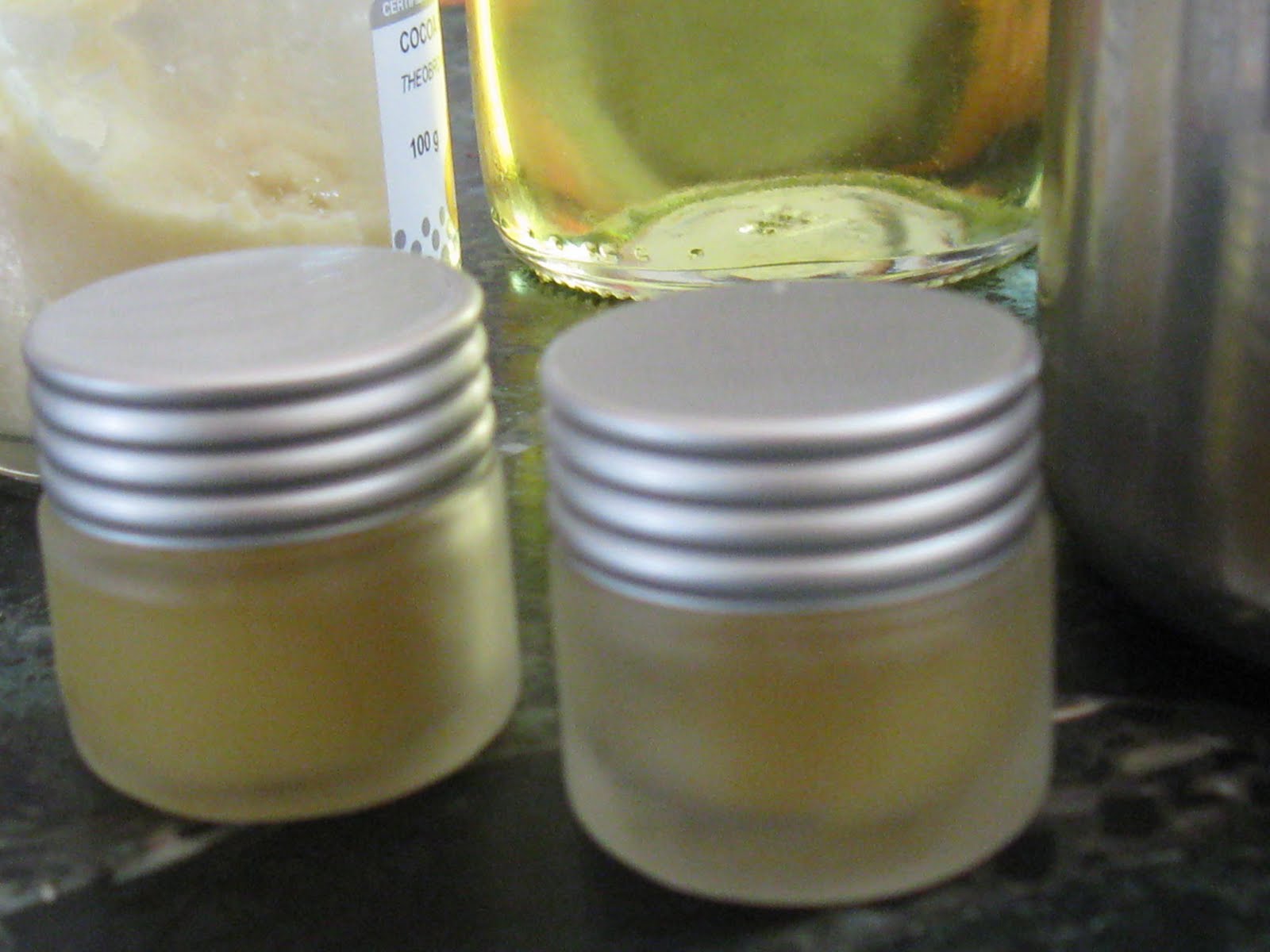
Extreme heat, cold or wind can make us all suffer from dry, cracked lips.If you have made ointment,you can make a very good lip balm that will protect and moisturise. The formula and method is almost the same.
Ingredients

15g beeswax beads
5gm cocoa, shea or mango butter
60ml oils of choice, see below* 
1/2 teaspoon glycerine


Gently heat together the first three ingredients until combined.
Do not overheat.
Cool slightly before whisking in the glycerine. This is made easier if you warm it slightly by placing the whole bottle in a mug of hot water before measuring.
Pour into small jars while still soft.
The lip balm may be flavoured by adding one or two drops ONLY of peppermint or spearmint essential oil before pouring.

Nerys once gave a an after dinner mint version of this for Christmas to which she had added chocolate buttons. It was good enough to eat and made me consider how many chemicals I had ingested from wearing lipstick over the years!

*The oils you use is for you to choose.  Almost any fixed (seed) oil can be used but do include either almond, olive or jojoba and some wheat germ for its vitamin E. Any oil suitable for eating can be used but these three are especially good for dry skin. Beware of using nut oils for people who may have allergies. I have one client who is gluten intolerant and insists on cream that doesn't wheatgerm oil.

In summer you may like to increase the amount of beeswax slightly if the balm becomes too soft in the hotter weather. You can also add a half teaspoon of warmed honey or aloe juice combined with the glycerine if you need to heal badly cracked lips. Don't be tempted to try to add too much as it will separate out of the mixture, sitting on the bottom as healthy sludge!

Saturday, May 8, 2010

Mothers Day...

I have just read a list entitled 'What real mother's want for Mother's Day.' It was the usual mixture of the mundane and the ridiculous.

Mother's are forever. Whether you are six or sixty, each May, we are presented with the dilemma of how to acknowledge our mother.
 
Nowadays it is a reminder of how much time she has played that role for me and an attempt to show my thanks for the advice always on the end of the phone; all those clothes washed; lifts to the station and the endless meals shopped for, cooked, served and cleaned up afterwards.

As my mother ages, I find our roles are beginning to reverse and I often take the role of caregiver. While she was visiting recently and I was cooking dinner for everyone, I overheard her remark to a friend that I was 'a treasure.' That she has the same opinion of me that I have for her is the best gift this 'real woman' could receive.

I hope all you mothers (and fathers) receive one as welcome,

Happy Mother's Day,
nirala

P.S Fresh flowers, tickets to tropical islands and phone calls are also welcome at my place!

Monday, May 3, 2010

Nanna's magic cream

For many years now I have made a range of herbal products including a beautiful green healing ointment. Over the years the formula has changed and the current version contains 11 essential oils, 6 tinctures and extracts of 17 different herbs, chosen for their varying properties, nearly all grown in my garden.
Ointment is a simple way to preserve and concentrate the healing power of herbs. The ingredients are easily sourced from your local chemist and health food shop. The equipment needed is minimal and can be found in most kitchens.
Choose your herbs for the properties you wish to bring to your ointment. I like to always start with comfrey, lavender and rosemary. You will need to make a herb oil and if you like, a tincture, starting at least 10 days before you wish to make the ointment. If you make your oil extraction in advance,  keep it in the refrigerator until needed. Tinctures keep well at room temperature but store out of reach of children.

Equipment:


Stainless steel jug or saucepan
Measuring jug
Plastic or wooden spatula
Scales
Clean jars with tight screw top lids to hold a total of 300gm.
Ingredients


120ml herb oil
20g beeswax, beads or block
120g lanolin
1 Tbsp or 30ml tincture of choice or tincture of benzoin (optional) 
2tsp or 15ml essential oils of choice
Method:


  1. Very gently melt the beeswax and lanolin together over a gentle heat. If you have a stainless steel jug, this works really well as you can melt and pour in the same container. Use a heat diffuser under the pot if you have one.

  2. As soon as the mixture is clear, turn off the heat. Remove pot to a heat proof surface and leave for a minute to cool slightly but not harden. The lower the temperatures, the more properties of the herbs are retained.

  3. Slowly stir in the herb oil, which should be at room temperature. If the mixture starts to look lumpy, sit the pot back on the warm stove but do not reheat.

  4. Add essential oils and tinctures and mix until incorporated.

  5. Pour into jars and lid. The ointment is at its best for nine months but I have used older pots on the animals with great results. Unopened will keep for much longer.
 

Any type of ointment can be made by the above method. Please note that wax based ointment is not suitable to use on burns, eczema or psoriasis or any conditions which require the skin to breathe. If any  adverse reaction or sensitivity is noted, discontinue use.
I use my multipurpose ointment on bites, grazes, blisters, cuts, nettle, nappy and reef rash, piles, stinging tree injuries, cracked feet and nipples and to draw boils and splinters. I have used it on chickens’ combs to cure stick fast fleas, on bald guinea pigs and injured dogs and cats with great success knowing it is a safe product  My son swears it cures mouth ulcers and my granddaughter is comforted by a dose of ‘nanna’s magic cream.’
The original formula was originally created by Nerys at Rivendell Farm. To take the lid off a pot and inhale the scent of the essential oil blend is a reminder of soothing words and gentle hands for our families and friends and many clients over the years. It is a wonderful reminder of the skills taught to me by an amazing person.
Green Healer (nanna’s magic cream) will soon be available via my website.
Go well,
nirala